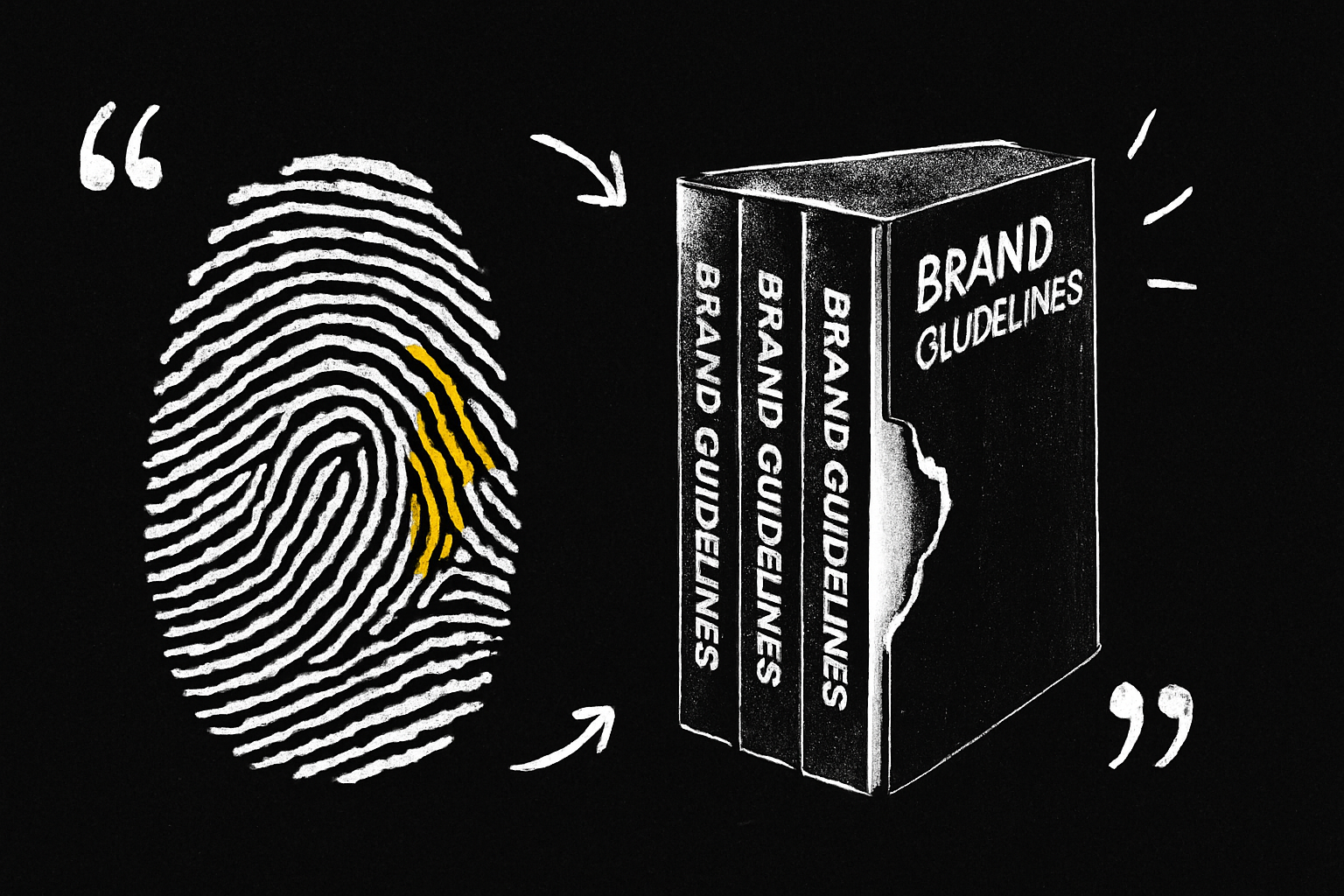

Marketing Week’s latest piece makes a straightforward argument: B2B brands that violate expectation stick in memory better than brands that play it safe. The mechanism isn’t comedy — it’s surprise. When something breaks the pattern you anticipated, your brain flags it as worth retaining. For B2B marketers running a podcast, this is worth sitting with.
Most B2B podcasts don’t do this. They confirm expectations at every turn: a polished intro, two professionals agreeing with each other for 40 minutes, a gentle outro. Entirely forgettable.
Safe podcasting is a category trap
When every show in your sector sounds the same — measured tone, safe guests, consensus conclusions — the category itself trains listeners to tune out. You’re not competing against a single rival show; you’re competing against the accumulated boredom of everything that came before you.
The Marketing Week argument applies directly here. Unexpected doesn’t mean unprofessional. It means doing something your audience didn’t predict: a format that shifts mid-episode, a guest who openly disagrees with the host, a topic your competitors would consider too risky to touch. These moments create what memory researchers call encoding specificity — the brain stores information that contrasts with its surroundings.
If your podcast sounds exactly like your competitors’ podcasts, the only differentiator left is distribution budget.
The distinction between weird and gimmicky
The Marketing Week piece is careful about this, and it matters for podcasting too. The goal isn’t weirdness for its own sake. The host at the family gathering isn’t performing surrealism — he’s expressing something genuine in an unexpected way. That’s the distinction.
B2B podcasters who chase novelty without genuine conviction produce shows that feel try-hard. The unexpectedness has to come from a real editorial point of view: a willingness to say something your industry hasn’t said, to disagree with a widely-held assumption, to structure a conversation differently because you actually believe the standard format serves the guest more than the listener.
Goalhanger — currently Britain’s fastest-growing private company according to this week’s Sunday Times list — built its catalogue on a simple but genuinely distinctive premise: take history seriously, tell it well, treat the audience as intelligent. That’s not gimmicky. It’s a clear editorial position executed consistently. The rest follows.
What this means for your show’s positioning
If you’re planning or auditing a B2B thought leadership podcast, run this test: describe your show in one sentence and then ask whether any of your three closest competitors could use exactly the same description. If yes, you don’t have a positioning — you have a format.
Specificity is the route to memorability. Not a show about supply chain strategy — a show that argues supply chain decisions are fundamentally financial decisions, and interviews CFOs accordingly. Not a show about HR leadership — a show that only talks to HR leaders who’ve made a call that cost them something professionally.
The constraint forces a point of view. The point of view produces surprise. The surprise creates memory.
The practical takeaway: before you record another episode, write down the one thing your show believes that most shows in your category would avoid saying. If you can’t write it down, your show doesn’t have it yet.