Anthropic has confirmed that Claude Cowork, its agentic task platform, is moving into beta on mobile and web. The pitch is simple: start a task on your laptop, pick it back up on your phone, and the agent keeps working across both. That sounds like a productivity feature. For anyone selling into B2B buyers, it is a signal about where research now happens.
Buyers no longer sit down at a desk and do a focused search session. They start something on a train, check it on a phone between meetings, and finish it on a laptop that evening. Agentic tools are being built to follow that pattern, not fight it. Claude Cowork’s cross-device continuity is Anthropic betting that task persistence, not device, is the unit of work. If that bet is right, the tools your buyers use to research vendors will increasingly work the same way: an agent doing homework across a fragmented day, pulling from whatever content it can retrieve and trust along the way.
Your Content Now Has to Survive Being Read by a Machine First
Here is the practical problem. When a buyer delegates part of their vendor research to an agent like Claude, that agent needs source material it can parse, quote, and attribute. A slick landing page with a hero video and three bullet points gives it almost nothing to work with. A 45-minute podcast conversation with a named VP of Engineering making a specific, falsifiable claim about a technical trade-off gives it a lot.
This is not a hypothetical shift. It is already how AI search products decide what to surface: structured, attributable, specific content beats polished but shallow marketing copy. A podcast transcript with clear speaker labels, timestamps, and concrete claims is exactly the kind of asset an agent can extract and cite with confidence. A generic 800-word blog post restating category common knowledge is not.
Most Podcast Programmes Aren’t Built for This Yet
The gap isn’t the recording. It’s everything that happens after. Companies that publish a weekly show but ship a raw, unedited transcript and a two-line show note are leaving the exact material an AI agent needs on the table. No speaker attribution beyond first names. No structured claims. No separation between the guest’s opinion and a stated fact with a source.
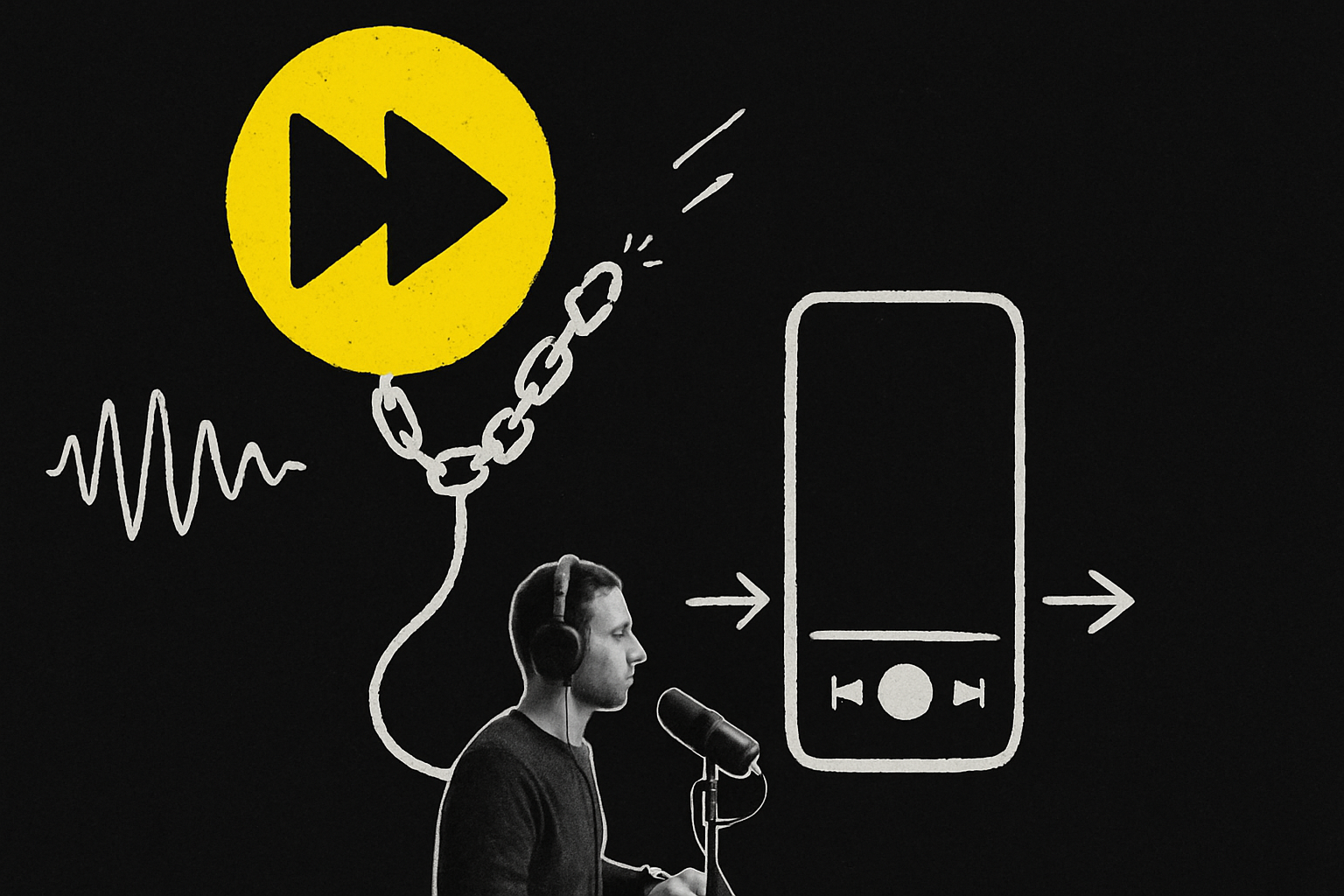
If you’re already producing a podcast, the fix is not expensive. It’s editorial discipline: transcripts that name speakers and roles properly, show notes that isolate the two or three concrete claims made in the episode, and publishing infrastructure that makes those claims crawlable rather than buried in a media player. Companies that treat their podcast as a structured knowledge asset, not just an audio file with a description, are building the exact input that agentic research tools are starting to reward.
The risk of ignoring this isn’t abstract. If your competitor’s podcast is retrievable and citable by the tools your buyers now use to do research, and yours isn’t, you don’t lose the argument. You never get mentioned in it.
Audit your last five published episodes this week. Check whether the transcript names speakers by title, whether the show notes isolate specific claims rather than summarising vibes, and whether the page hosting it is indexable at all. If two out of three fail, that’s your starting point, not a content refresh.